Sample Evidence Report
What the evidence report looks like
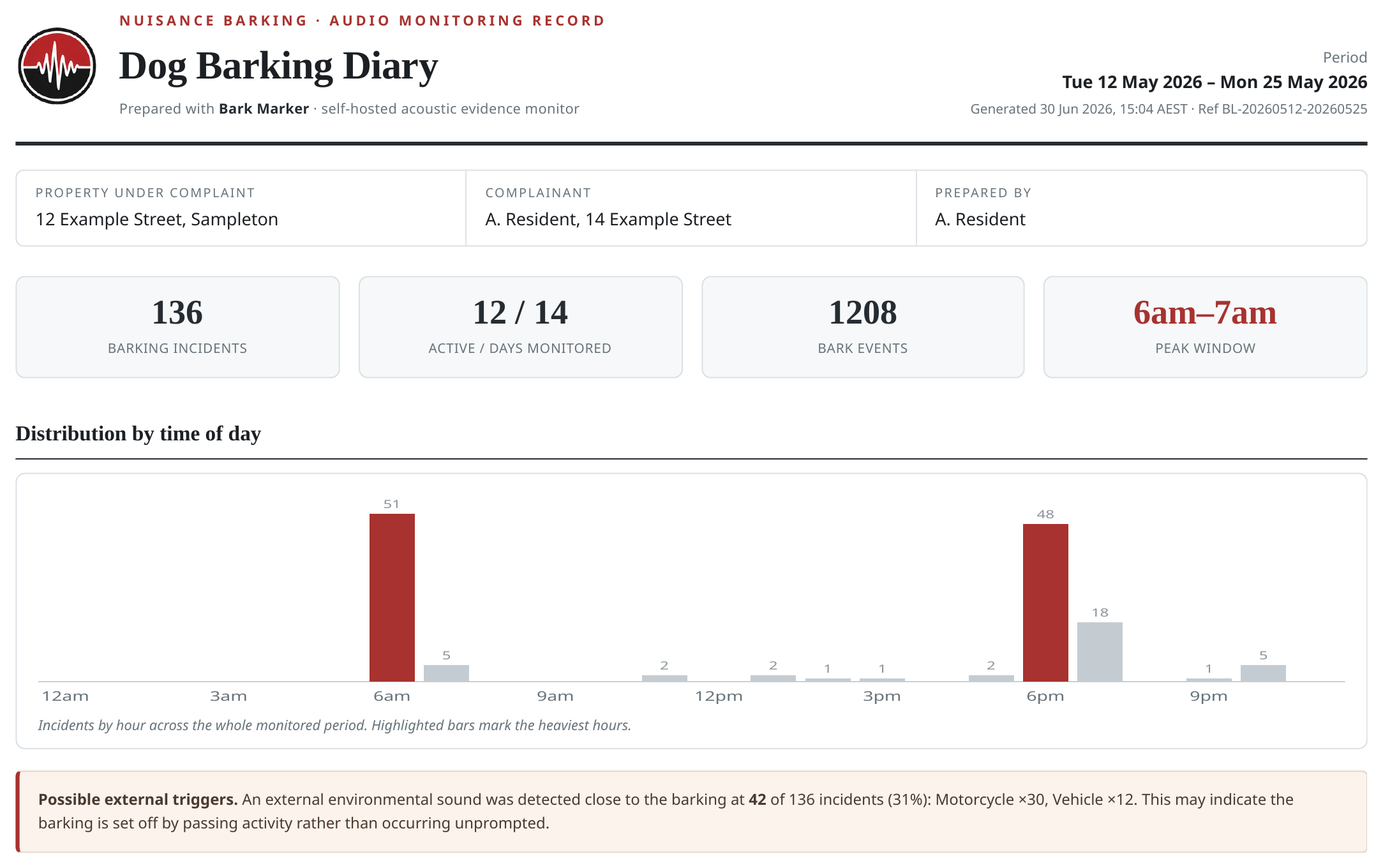
The whole point of Bark Marker is the report at the end, so here is a walk-through of what one actually contains. You can view the full interactive sample report in your browser, and the image below shows the overall layout.
Open the full interactive sample report in a new tab.
This example is generated from synthetic, demo data. It is not a record of a real dog or a real household. It exists so you can see the structure and judge whether it is the kind of evidence you need, before you hire a unit.
Peak windows (hourly distribution)
The report breaks the day into hours and shows how much barking landed in each one. This is usually the first thing that tells the story. Barking problems tend to cluster, often early morning before an owner leaves and again in the evening, and the hourly chart makes that concentration impossible to miss. For a complaint, it matters because many councils care about when the barking happens, not just that it happens.
Daily pattern (sparklines)
Alongside the hourly view, the report shows a small day-by-day sparkline for the whole monitoring period. This is what turns a single noisy morning into a pattern. A council, or a reasonable owner, can see at a glance that this was not a one-off but happened again and again across the days you were home.
Full incident log
Every confirmed barking event is listed with its date, start time, and duration. This is the backbone of the evidence: not a vague summary, but a timestamped record you can point to line by line. It is the difference between “it barks all the time” and a specific, checkable list.
Possible external triggers
Where the unit picked up other sounds occurring alongside the barking, the report notes them. This section can be genuinely useful for the owner, because it hints at what is setting the dog off. It also strengthens your picture of the situation by showing the barking is a reaction to something repeatable, not random.
Methodology and declaration
Finally, the report explains in plain English how the data was gathered: that the unit listened continuously, that events were confirmed as belonging to the target dog, and how the timestamps were recorded. This methodology section and declaration matter because they show the evidence was collected consistently and transparently, rather than cherry-picked.
A note on what this is and isn’t
A Bark Marker report is an evidence tool, not legal advice, and it does not guarantee any particular outcome. Councils assess complaints under their own local laws and processes, so always check your council’s specific requirements. What the report does is make sure that when you raise the issue, you bring a clear, measurable record instead of just frustration.
If this is the kind of evidence you need, hire a Bark Marker unit and put it to work on your situation.